Table Of Content

It can provide some amount of protection against outside elements, but not at a significant level. Humans generally keep their hair groomed and styled to appear more fashionable. There are different types of hair, for example, the hair forming eyelashes, hair on the back of hands, and hair on the head. When talking about hair in general, the hair on the head is the topic. Keratin is a type of protein created from polymers of amino acids. Genetics also play a significant role in determining the characteristics of hair and fur in different species.
The Difference Between Dog Fur and Dog Hair
Whiskers and quills are distinct types of hairs that are specific to animals. Quills are just enlarged hairs, but whiskers actually have sensory receptors within them. Therefore, dogs and cats use their whiskers as an aid to seeing in the dark. On a scientific level, you can’t find a difference between hair and fur. To answer the hair vs. fur debate, you need to look at the types of hair, growth pattern, purpose, and texture.
Main Differences Between Hair and Fur
One remarkable example of an evolutionary adaptation is the polar bear’s fur. The polar bear, inhabiting the frigid Arctic regions, has a unique fur structure that provides insulation and camouflage. Its fur appears white, which helps it blend into the snowy surroundings and remain hidden from potential prey or predators.
Variations in Hair and Fur Characteristics”
If a mammal has both guard and ground hair, it is said to have fur. Human hair is made up of keratin, a type of protein created from polymers of amino acids. Human hair grows independently and does not stop growing after it reaches a certain length.
Big hair? Bald? How much difference your hair really makes to keep you cool or warm - The Conversation Indonesia
Big hair? Bald? How much difference your hair really makes to keep you cool or warm.
Posted: Wed, 14 Jun 2023 07:00:00 GMT [source]
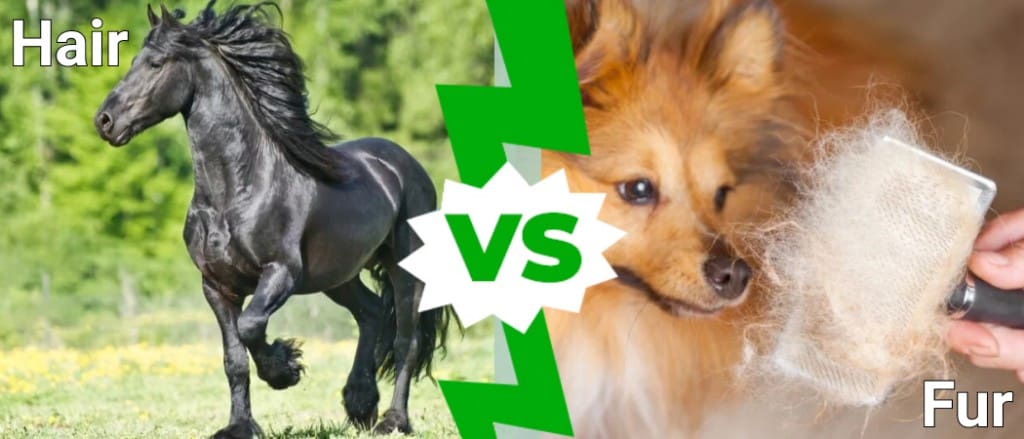
The fur’s growth cycle is usually synchronized to shed at specific times of the year, while human hair growth is less uniform. Hair and fur have the same chemical composition and are made of keratin. They have the same chemical make-up as skin, feathers, and nails. The purpose of hair and fur is to provide insulation and protection.
Mammals with reduced amounts of fur are often called "naked", as with the naked mole-rat, or "hairless", as with hairless dogs. It is made up of keratin, the fibrous protein which is also the main component of nails, feathers, and the skin. Aside from providing protection, hair and fur also provide insulation. Although both have the same chemical makeup and body functions, they are used to refer to different types of protective covering.
Composition of Fur
Hertzko Pet Brush Review: Best Cat Brush of 2024 - Family Handyman
Hertzko Pet Brush Review: Best Cat Brush of 2024.
Posted: Fri, 23 Jun 2023 07:00:00 GMT [source]
The cycle itself is relative not only to different species, but also to different areas of the body, which explains why the hair on your arms and legs isn’t the same length as the hair on your head. For instance, the same 2- to 7-year anagen phase on your head lasts 30 to 45 days on your arms and legs. One of the features shared by nearly every mammal species on Earth — from antelopes to zebras, and even humans — is that their bodies are covered in structures known individually as "hairs" and collectively as "fur." Another noticeable difference between human and animal hair is the composition.
Interestingly, animals and mammals without fur are called hairless, not furless. Additionally, apes, which are the closest species to humans, are very hairy, while we have hair mostly on our head and a small part of our face. The length of hair and fur is determined by a variety of factors, including genetics, environment, and evolutionary adaptations.
Human vs Animal
The outgrowth of hair is projected between the dermis and hypoderms or the follicles that are also known as hair bulbs. Hair is provided with nutrients, vitamins, mineral salts, nourishment, and vital elements by the blood vessels incarnated in the hair shaft. Ultimately, the future of fur and hair is intertwined with the choices made by consumers. As awareness of ethical and environmental issues continues to rise, consumers are increasingly inclined to make informed and conscientious choices.
It becomes clearer when you consider that longer haired dogs just have a longer period of hair growth than something like a Lab, which has a shorter cycle. So in humans, hair will stop growing after the cycle runs through each phase. It’s just that the cycle in you as a human is longer than, say, Fido’s hair growth cycle.
This leads to the “exogen” phase, in which the hair falls out to start the cycle over again. One of the key differences between human and animal hair is the core of the hair follicle. In case of animals, the core allows for the coating of hair to provide excellent insulation from not only heat and cold, but also a fair amount of protection from rain as well. Along with these thermal regulating qualities, coarse nature of animal hair works as a great means of holding in cold or heat, as well as preventing rain and moisture. In contrast, human hair lacks this ability and does nothing to provide temperature regulation for the body. Fur coats also tend to shed more and disperse in the air with shorter growth cycles.


No comments:
Post a Comment